

Royal Columbian Hospital reports 39% reduction in ICU pneumonia rates with nasal photodisinfection at ESICM
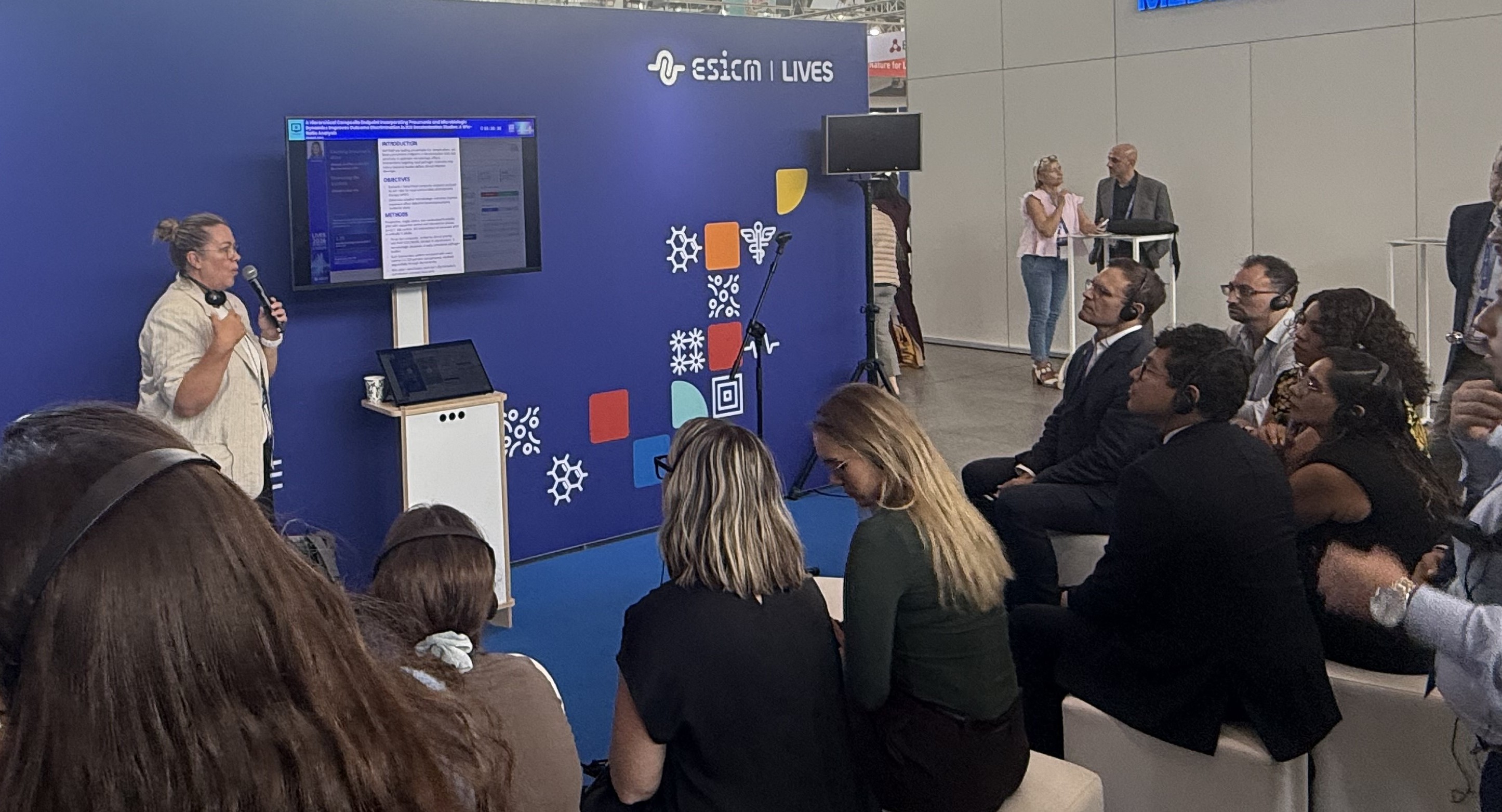
Dr. Elizabeth Rohrs presents findings from the SMURF Feasibility Pilot Study at ESICM.
Dr Elizabeth Rohrs of the Royal Columbian Hospital reports a 39% reduction in ICU pneumonia rates among patients treated with nasal photodisinfection at ESICM
The preliminary results from SMURF suggest that a simple, five-minute nasal treatment could make a real difference at scale”
NEW WESTMINSTER, BRITISH COLUMBIA, CANADA, October 13, 2026 /EINPresswire.com/ -- Dr. Elizabeth Rohrs, PhD, RRT, principal investigator at Royal Columbian Hospital (RCH) and RCH Foundation Research Director, presented findings from the SMURF (Suppression of Microbial Burden to Reduce Pneumonia in Critical Illness) Feasibility Pilot Study at the European Society of Intensive Care Medicine (ESICM) congress in Lisbon this week.— Dr. Elizabeth Rohrs
The pilot study observed a 39.5% reduction in pneumonia rates following the introduction of nasal photodisinfection, highlighting a potential new approach to infection prevention in critically ill patients. Pneumonia rates decreased from 14.9 to 9.0 cases per 1,000 ICU patient-days.
Although the pilot, which was published in the peer-reviewed journal Critical Care, was not powered to establish a statistically significant reduction in pneumonia, it demonstrated a statistically significant reduction in nasal microbial burden and reported no intervention-related adverse events. The findings support further investigation in a larger multicentre randomised trial.
While this was the first deployment of nasal photodisinfection therapy in an ICU setting, it is already being used in hospitals across Canada and the UK before surgery to reduce the risk of surgical site infections.
The findings suggest that reducing microbial burden in the nose—a potential reservoir of respiratory pathogens—could help lower the risk of pneumonia, including ventilator-associated pneumonia and hospital-acquired pneumonia. Further trials are needed to confirm the clinical benefit.
Dr. Elizabeth Rohrs commented:
“Every case of pneumonia prevented in ICUs translates to days of ventilation avoided, earlier discharges, and beds freed for the next critically ill patient. The preliminary results from SMURF suggest that a simple, five-minute nasal treatment could make a real difference at scale. Our next step is a multicenter randomised trial to confirm these findings, and we’re excited to build on what this pilot has shown.”
Dr. Steven Reynolds, MD, FRCPC, Executive Lead of the AIM Institute and TB Vets Professor in Critical Care at Simon Fraser University, stated:
“The initial findings from the SMURF study are encouraging, providing a clear trajectory for validating an approach that could represent a paradigm shift in pneumonia prevention. Ventilator-associated pneumonia (“VAP”) remains a significant burden, contributing to patient mortality, prolonged suffering, and considerable increased costs within ICUs. By preventing a meaningful proportion of these infections, we can fundamentally improve clinical outcomes and better support a healthcare system managing increasingly strained resources.”
The ESICM presentation explores its potential application in intensive care, where nasal photodisinfection could offer an additional approach to pneumonia prevention and play a significant role in the prevention of infections in ICUs.
The SMURF Feasibility Pilot Study was supported by the Royal Columbian Hospital Foundation, whose investment in AIM research continues to drive frontline innovation in Canada.
ENDS
NOTES TO EDITORS:
About the Royal Columbian Hospital, Royal Columbian Hospital Foundation (RCHF) and Advancing Innovation in Medicine (AIM)
Royal Columbian Hospital (RCH) is a large tertiary care hospital in Fraser Health, one of Canada’s largest health authorities. It has a legacy of care since 1862 and serves more than 2.2 million people with unparalleled expertise in cardiac, trauma, neurosciences, and high-risk maternity as a provincial referral centre, making it a vital lifeline for critical medical needs in British Columbia, Canada.
The hospital’s foundation, a non-profit organization that supports RCH through public donations, is the largest external funder of research and innovation at RCH. Advancing Innovation in Medicine (AIM) is the research and innovation division of the Royal Columbian Hospital Foundation. AIM is dedicated to pioneering innovative clinical solutions that enhance patient outcomes, improve healthcare productivity, and create global impact through strategic partnerships. Find out more: www.rchfoundation.com/aiminstitute
The Royal Columbian Hospital
The Royal Columbian Hospital
Legal Disclaimer:
EIN Presswire provides this news content "as is" without warranty of any kind. We do not accept any responsibility or liability for the accuracy, content, images, videos, licenses, completeness, legality, or reliability of the information contained in this article. If you have any complaints or copyright issues related to this article, kindly contact the author above.
