What Makes Professional Semiconductor Quartz Solutions Essential for Modern Wafer Fabrication
LIANYUNGANG, JIANGSU, CHINA, October 11, 2026 /EINPresswire.com/ -- Have you ever wondered why a microscopic speck of airborne dust or a trace chemical impurity can disrupt an entire semiconductor manufacturing run? In high-temperature furnace processing and wet cleaning steps, silicon wafers spend hours in direct contact with quartz components. At advanced node geometries below seven nanometers, high-purity quartz ceases to be a simple heat-resistant container. Instead, it serves as a critical process boundary that regulates thermal uniformity and determines contamination budgets across every batch. Investing in professional semiconductor quartz solutions provides modern fabrication facilities with a verifiable clean threshold rather than just basic structural hardware. By controlling thermal stability, surface physical parameters, and ionic micro-decontamination across every processing cycle, high-performance quartz consumables actively protect delicate silicon structures against unforeseen defect spikes.
Q1: Why Can't Standard High-Purity Quartz Enter Advanced Process Nodes?
Many component distributors assume that raw silicon dioxide purity above 99.99% qualifies a product for advanced wafer manufacturing. However, raw purity ratings alone do not prevent yield degradation during thermal cycles. Unprocessed high-purity glass contains soluble surface alkali metals, hydroxyl ion groups, and residual stress points. During high-temperature rapid thermal processing (RTP) or diffusion steps, unconditioned components release airborne sodium or potassium ions into the chamber. These trace contaminants migrate directly into delicate silicon substrates, shifting transistor threshold voltages and causing electrical breakdown. When unconditioned hardware operates at elevated temperature thresholds, surface structural instabilities accelerate micro-crack propagation, compromising overall thermal equilibrium across the reaction zone.
To prevent structural failure under extreme conditions, high-grade fabrication components undergo multi-step thermal annealing and strict ionic decontamination. Industrial fabricators like Southeast Quartz build controlled thermal processing routines that remove internal physical stress while locking down surface hydroxyl levels. Standard material certificates confirm chemical composition, but customized manufacturing protocols deliver clean chemical interfaces. These refined process boundaries isolate sensitive silicon substrates from external chemical influences throughout high-temperature oxidation and diffusion cycles. Furthermore, rigorous chemical leaching procedures ensure that volatile surface elements remain well below sub-parts-per-billion levels prior to initial installation inside cleanroom environments.
Q2: What Invisible Micro-Defects Do Professional Solutions Resolve?
Microscopic inconsistencies during thermal operations often lead to wafer-to-wafer process drift across different production lots. Inconsistent component dimensions, concentricity shifts in furnace tubes, and minor inner surface roughness cause subtle gas turbulence and thermal gradients. When a quartz boat or wafer carrier cycles through 1100°C temperatures, uneven thermal expansion can cause structural sagging, mechanical binding, or surface particle shedding. When micro-particles drop onto a wafer, engineers frequently attribute the resulting defect spikes to photolithography errors rather than structural distortion in thermal handling tools. Over repeated thermal cycles, minute structural displacements alter process gas velocity distributions, leading to uneven chemical film thickness across wafer surfaces.
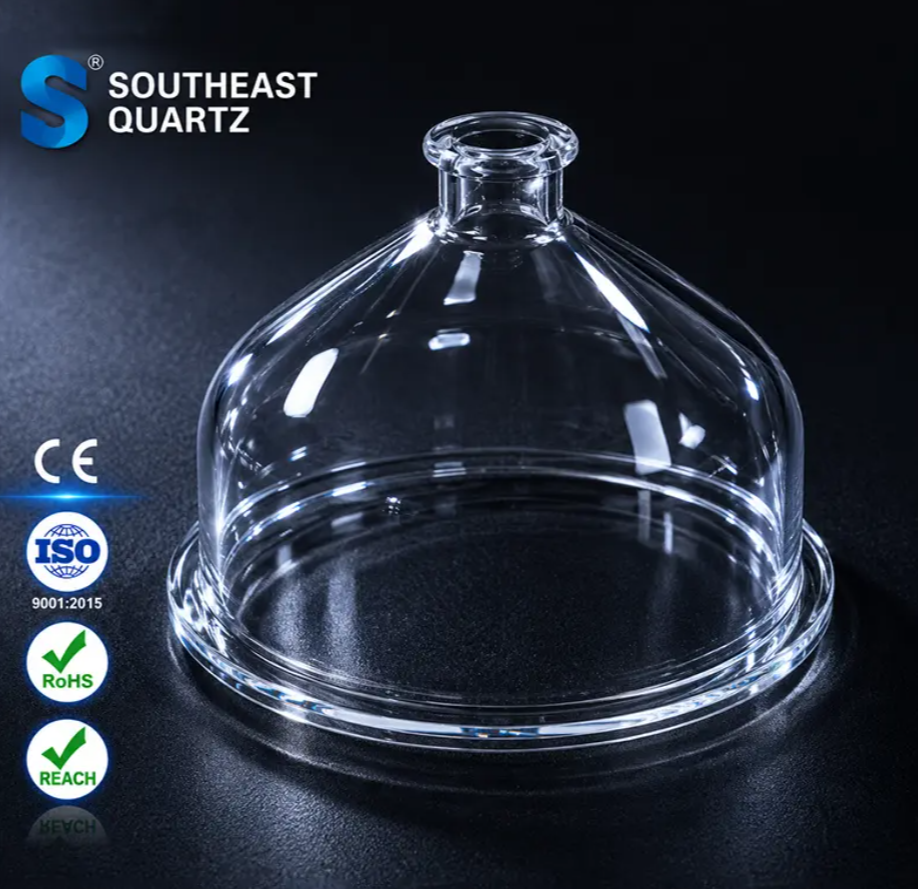
Engineered semiconductor quartz solutions address these microscopic yield risks by aligning physical tolerances with statistical process control parameters. Fabricators such as Lianyungang Southeast Quartz Products Co.,Ltd. maintain sub-millimeter axial alignment and smooth surface finishes on custom furnace tubes, bell jars, and boat carriers. These structural refinements maintain smooth gas flow dynamics during chemical vapor deposition (CVD) and thermal diffusion. Preventing structural deformation under repeated high-temperature stress allows fabrication facilities to minimize defect rates directly attributable to material handling components. Maintaining precise dimensional stability over thousands of operational hours helps process engineering teams eliminate recurring mechanical jams and thermal shock fractures during automated wafer transfer operations.
Q3: How Can You Identify a Truly Professional Supplier?
Determining whether a supplier delivers genuine semiconductor quartz requires auditing three core manufacturing capabilities:
1.Traceable Raw Material Sourcing: Established production lines rely on audited natural quartz deposits, such as those refined in Donghai County, Jiangsu Province. Traceable ore origins ensure consistent chemical density and low hydroxyl levels across raw material lots.
2.Documented Thermal Annealing: Component longevity depends on precise furnace temperature profiles that relieve internal stresses caused by glassblowing or mechanical cutting.
3.Comprehensive Cleanroom Testing: Advanced suppliers provide certified surface ion analytical reports and helium mass spectrometry leak detection rather than simple dimensional logs.
Before integrating new consumables into fabrication equipment, process engineers require complete documentation verifying structural integrity and chemical purity. Operating out of Donghai County, Lianyungang Southeast Quartz Products Co.,Ltd. combines local raw material access with dedicated manufacturing lines. The facility produces fused quartz tubes, oversized diffusion pipes, furnace boats, and custom quartz rings designed for high-vacuum and high-temperature environments. Testing procedures include pressure testing, purity analysis, and helium mass spectrometry leak detection to verify structural integrity before installation. Auditing these internal testing protocols provides semiconductor manufacturing teams with full transparency regarding material quality and lot-to-lot reliability.
Q4: How Does Tailored Component Engineering Meet Evolving Fabrication Needs?
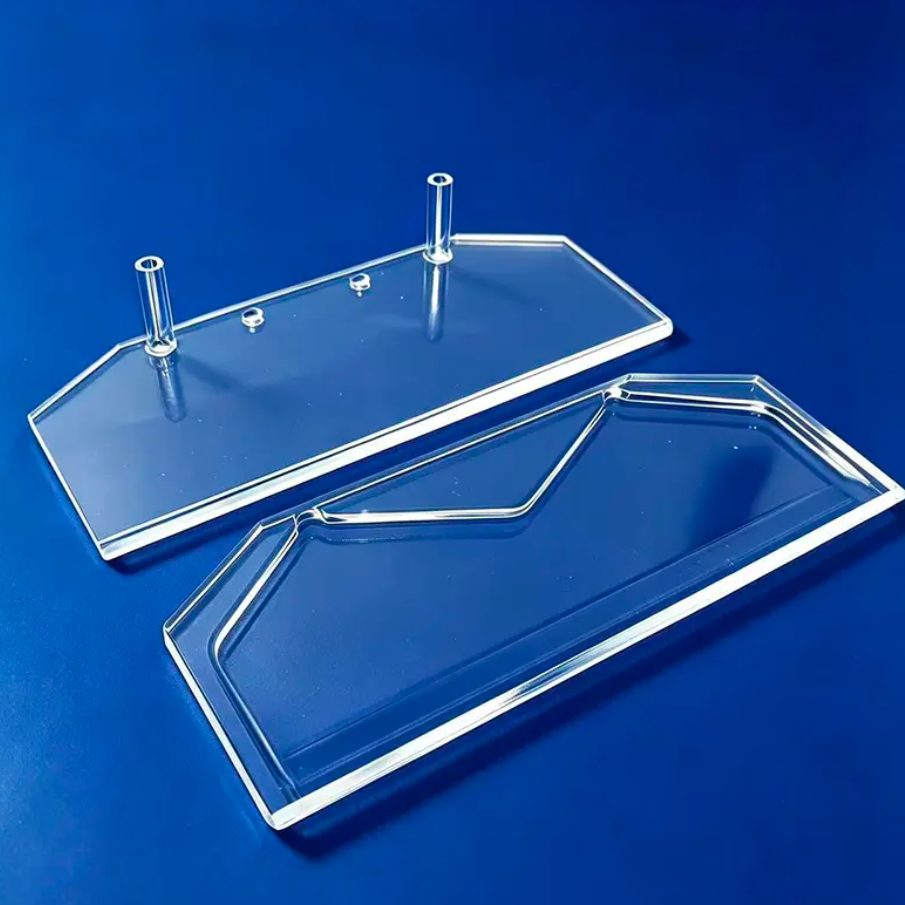
Modern fabrication lines frequently modify equipment layouts, chamber configurations, and gas delivery networks. These modifications require customized semiconductor quartz solutions tailored to exact furnace dimensions and chemical environments. Standard off-the-shelf quartzware often fails to accommodate specific mounting geometries or high-temperature sealing needs. Specialized manufacturers supply customized quartz rings, insulation shields, lamp holders, and chemical purification apparatus according to specific process schematics. When fabs transition between different thermal processing protocols, custom-built component architectures eliminate structural mismatches and gas leakage risks at vital connection points.
At Lianyungang Southeast Quartz Products Co.,Ltd., flexible fabrication capabilities enable rapid custom prototyping alongside large-volume production. Their engineers work directly from customer equipment parameters to construct plasma-fused ingots, irregular sheet geometries, and specialized quartz instruments. By supporting customized dimensions and tight manufacturing tolerances, Southeast Quartz helps global customers optimize thermal shock resistance and extend component operating lifespans across diverse manufacturing environments. This dedicated engineering adaptability ensures that customized replacement parts integrate smoothly into existing process chambers without disrupting established tool calibration baselines or cleanroom operational workflows.
Securing Process Consistency and Wafer Yield Integrity
As wafer fabrication technology advances toward narrower line widths, component reliability directly impacts commercial profitability. High-purity semiconductor quartz solutions function as yield protection investments rather than simple consumable supplies. Selecting qualified technical partners allows fabrication facilities to maintain stable process chambers, lower micro-particle contamination, and achieve predictable wafer outputs. Investing in fully audited thermal components provides process engineers with peace of mind during complex multi-layer manufacturing sequences.
Lianyungang Southeast Quartz Products Co.,Ltd. provides global customers across Europe, the Americas, and Asia with high-purity quartz furnace tubes, boat carriers, and custom laboratory instruments. By combining raw material traceability, documented thermal processing, and rigorous leak testing, Southeast Quartz delivers reliable hardware designed for modern wafer manufacturing. Fabs that prioritize verifiable process hygiene and precise structural engineering ensure consistent productivity across every manufacturing batch.
To discover how specialized quartzware can support your wafer fabrication requirements, explore product specifications and custom engineering services at https://www.dnquartz.com/
Q1: Why Can't Standard High-Purity Quartz Enter Advanced Process Nodes?
Many component distributors assume that raw silicon dioxide purity above 99.99% qualifies a product for advanced wafer manufacturing. However, raw purity ratings alone do not prevent yield degradation during thermal cycles. Unprocessed high-purity glass contains soluble surface alkali metals, hydroxyl ion groups, and residual stress points. During high-temperature rapid thermal processing (RTP) or diffusion steps, unconditioned components release airborne sodium or potassium ions into the chamber. These trace contaminants migrate directly into delicate silicon substrates, shifting transistor threshold voltages and causing electrical breakdown. When unconditioned hardware operates at elevated temperature thresholds, surface structural instabilities accelerate micro-crack propagation, compromising overall thermal equilibrium across the reaction zone.
To prevent structural failure under extreme conditions, high-grade fabrication components undergo multi-step thermal annealing and strict ionic decontamination. Industrial fabricators like Southeast Quartz build controlled thermal processing routines that remove internal physical stress while locking down surface hydroxyl levels. Standard material certificates confirm chemical composition, but customized manufacturing protocols deliver clean chemical interfaces. These refined process boundaries isolate sensitive silicon substrates from external chemical influences throughout high-temperature oxidation and diffusion cycles. Furthermore, rigorous chemical leaching procedures ensure that volatile surface elements remain well below sub-parts-per-billion levels prior to initial installation inside cleanroom environments.
Q2: What Invisible Micro-Defects Do Professional Solutions Resolve?
Microscopic inconsistencies during thermal operations often lead to wafer-to-wafer process drift across different production lots. Inconsistent component dimensions, concentricity shifts in furnace tubes, and minor inner surface roughness cause subtle gas turbulence and thermal gradients. When a quartz boat or wafer carrier cycles through 1100°C temperatures, uneven thermal expansion can cause structural sagging, mechanical binding, or surface particle shedding. When micro-particles drop onto a wafer, engineers frequently attribute the resulting defect spikes to photolithography errors rather than structural distortion in thermal handling tools. Over repeated thermal cycles, minute structural displacements alter process gas velocity distributions, leading to uneven chemical film thickness across wafer surfaces.
Engineered semiconductor quartz solutions address these microscopic yield risks by aligning physical tolerances with statistical process control parameters. Fabricators such as Lianyungang Southeast Quartz Products Co.,Ltd. maintain sub-millimeter axial alignment and smooth surface finishes on custom furnace tubes, bell jars, and boat carriers. These structural refinements maintain smooth gas flow dynamics during chemical vapor deposition (CVD) and thermal diffusion. Preventing structural deformation under repeated high-temperature stress allows fabrication facilities to minimize defect rates directly attributable to material handling components. Maintaining precise dimensional stability over thousands of operational hours helps process engineering teams eliminate recurring mechanical jams and thermal shock fractures during automated wafer transfer operations.
Q3: How Can You Identify a Truly Professional Supplier?
Determining whether a supplier delivers genuine semiconductor quartz requires auditing three core manufacturing capabilities:
1.Traceable Raw Material Sourcing: Established production lines rely on audited natural quartz deposits, such as those refined in Donghai County, Jiangsu Province. Traceable ore origins ensure consistent chemical density and low hydroxyl levels across raw material lots.
2.Documented Thermal Annealing: Component longevity depends on precise furnace temperature profiles that relieve internal stresses caused by glassblowing or mechanical cutting.
3.Comprehensive Cleanroom Testing: Advanced suppliers provide certified surface ion analytical reports and helium mass spectrometry leak detection rather than simple dimensional logs.
Before integrating new consumables into fabrication equipment, process engineers require complete documentation verifying structural integrity and chemical purity. Operating out of Donghai County, Lianyungang Southeast Quartz Products Co.,Ltd. combines local raw material access with dedicated manufacturing lines. The facility produces fused quartz tubes, oversized diffusion pipes, furnace boats, and custom quartz rings designed for high-vacuum and high-temperature environments. Testing procedures include pressure testing, purity analysis, and helium mass spectrometry leak detection to verify structural integrity before installation. Auditing these internal testing protocols provides semiconductor manufacturing teams with full transparency regarding material quality and lot-to-lot reliability.
Q4: How Does Tailored Component Engineering Meet Evolving Fabrication Needs?
Modern fabrication lines frequently modify equipment layouts, chamber configurations, and gas delivery networks. These modifications require customized semiconductor quartz solutions tailored to exact furnace dimensions and chemical environments. Standard off-the-shelf quartzware often fails to accommodate specific mounting geometries or high-temperature sealing needs. Specialized manufacturers supply customized quartz rings, insulation shields, lamp holders, and chemical purification apparatus according to specific process schematics. When fabs transition between different thermal processing protocols, custom-built component architectures eliminate structural mismatches and gas leakage risks at vital connection points.
At Lianyungang Southeast Quartz Products Co.,Ltd., flexible fabrication capabilities enable rapid custom prototyping alongside large-volume production. Their engineers work directly from customer equipment parameters to construct plasma-fused ingots, irregular sheet geometries, and specialized quartz instruments. By supporting customized dimensions and tight manufacturing tolerances, Southeast Quartz helps global customers optimize thermal shock resistance and extend component operating lifespans across diverse manufacturing environments. This dedicated engineering adaptability ensures that customized replacement parts integrate smoothly into existing process chambers without disrupting established tool calibration baselines or cleanroom operational workflows.
Securing Process Consistency and Wafer Yield Integrity
As wafer fabrication technology advances toward narrower line widths, component reliability directly impacts commercial profitability. High-purity semiconductor quartz solutions function as yield protection investments rather than simple consumable supplies. Selecting qualified technical partners allows fabrication facilities to maintain stable process chambers, lower micro-particle contamination, and achieve predictable wafer outputs. Investing in fully audited thermal components provides process engineers with peace of mind during complex multi-layer manufacturing sequences.
Lianyungang Southeast Quartz Products Co.,Ltd. provides global customers across Europe, the Americas, and Asia with high-purity quartz furnace tubes, boat carriers, and custom laboratory instruments. By combining raw material traceability, documented thermal processing, and rigorous leak testing, Southeast Quartz delivers reliable hardware designed for modern wafer manufacturing. Fabs that prioritize verifiable process hygiene and precise structural engineering ensure consistent productivity across every manufacturing batch.
To discover how specialized quartzware can support your wafer fabrication requirements, explore product specifications and custom engineering services at https://www.dnquartz.com/
Lianyungang Southeast Quartz Products Co.,Ltd.
+ +86 135 8528 6180
Legal Disclaimer:
EIN Presswire provides this news content "as is" without warranty of any kind. We do not accept any responsibility or liability for the accuracy, content, images, videos, licenses, completeness, legality, or reliability of the information contained in this article. If you have any complaints or copyright issues related to this article, kindly contact the author above.