

From Scientific Curiosity to Suspense Fiction: Patricia Cane Discusses SNAPS
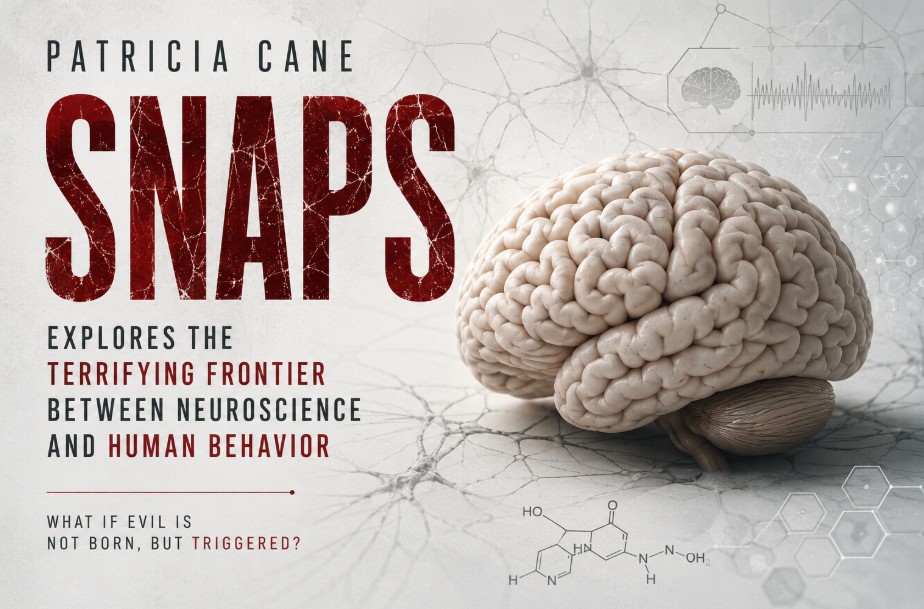
SNAPS _ Cane Patricia AuthorPublishingExperts
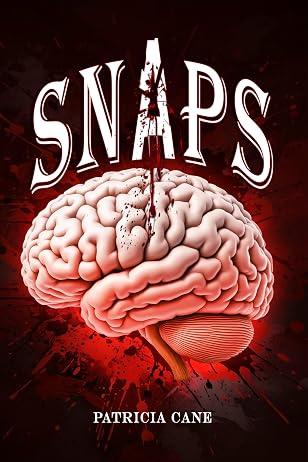
SNAPS by Patricia Cane
SNAPS, which stands for Serotonin Neurotransmitter Activation Protein Syndrome.
ROGUE RIVER,, OR, UNITED STATES, September 3, 2026 /EINPresswire.com/ -- How a snowy day, a fascination with serotonin, and a question about human responsibility became a psychological thriller.
For Patricia Cane, SNAPS did not begin with a lifelong ambition to become a novelist. It began with a snowy day, a computer, and a little boredom.
What started as something to pass the time eventually became a 225-page suspense novel that brings together science, criminal law, psychology, and moral philosophy. At its heart is an unsettling question: What if an otherwise ordinary person committed a violent crime because of a biological reaction beyond their control?
In this exclusive interview, Cane discusses the unlikely origins of SNAPS, her transition from science to fiction, the challenge of writing her first novel, and her next mystery, Blackberries.
A Novel Born From Curiosity
Cane says she began writing SNAPS almost casually.
"It started out of boredom," she recalls. She was snowed in, looking for something to do, and began writing without a plan or expectation that the manuscript would become a book.
Eventually, she abandoned it.
About a year and a half later, while cleaning out her computer, Cane found the manuscript again. To her surprise, she thought it was worth continuing. She returned to the story and eventually worked with a writing coach who helped her understand the craft and develop greater confidence.
The experience transformed what had started as a pastime into something she genuinely enjoyed.
Cane's scientific background provided the story's intellectual foundation. While reading about serotonin, she developed the acronym SNAPS, short for Serotonin Neurotransmitter Activation Protein Syndrome, a fictional biological condition at the center of the novel.
Rather than outlining every detail in advance, Cane writes intuitively. Characters and situations emerge as the story develops, allowing the narrative to reveal itself along the way.
When Biology Meets Crime
The novel's central character, Jameson, is a scientist whose work begins with serotonin and animal research.
His world changes when he begins hearing from people whose friends or relatives have committed violent crimes while taking antidepressant medications. At first, Jameson dismisses the connection. His research concerns laboratory animals, not human behavior.
But the cases accumulate.
The people involved appear to share a crucial connection: they are taking the same medication.
What follows draws Jameson into a broader investigation involving scientific research, criminal justice, pharmaceutical companies, and one of the oldest questions surrounding crime: Who is responsible for an act when something has altered the mind of the person who committed it?
Cane is particularly interested in the uncomfortable possibility that people who commit terrible acts may not always be fundamentally different from everyone else.
What if biology, chemistry, or medication can temporarily change a person's mental state? What if an otherwise ordinary individual commits a terrible act because something disrupted their thinking?
Those questions give SNAPS its distinctive tension.
Beyond "Who Did It?"
Many thrillers are built around identifying the killer. SNAPS takes a different route.
Its mystery is not simply who committed the crime, but who should ultimately be held responsible.
Cane explores what might happen when biological factors intersect with criminal accountability. If a prescription medication contributes to aggression or impaired judgment, should the law treat that person exactly like someone who deliberately planned a crime? Should the medication itself become part of the legal equation? And could a pharmaceutical company bear some responsibility?
Cane does not pretend these questions have simple answers. Instead, she uses them to create a story that operates on both a suspenseful and philosophical level.
The Hardest Part Was Believing She Could Do It
For Cane, the greatest challenge of writing her first novel was not the writing itself.
It was confidence.
She initially did not believe she was capable of writing a novel. Discovering that her early drafts had genuine potential slowly changed that belief.
Her writing coach also pushed her beyond plot, encouraging her to think about setting, atmosphere, character, and the small details that allow readers to see a scene.
Cane's advice to aspiring writers follows naturally from that experience: find people who will tell you the truth.
Not people who simply say the work is wonderful, but editors, coaches, and experienced readers willing to explain what works, what does not, and why.
She also recommends reading widely and studying the mechanics behind compelling writing: how authors create tension, construct scenes, and keep readers turning pages.
What's Next: Blackberries
Cane is already working on her next mystery, Blackberries.
The idea came from the landscape around her Oregon home, where blackberry bushes are thick, wild, and notoriously difficult to eliminate.
Looking at one particularly dense patch, she had a dark thought: it would be a perfect place to hide a body.
That thought became the beginning of another mystery.
The story follows two twelve-year-old boys who discover what appears to be a human skull hidden in a blackberry thicket. Their discovery leads to a murder investigation involving unidentified remains, DNA analysis, forensic science, and the lesser-known field of forensic botany.
Plants, pollen, soil, and environmental evidence can all become clues.
For Cane, that intersection of science and investigation offers another opportunity to explore the territory where her professional interests and her imagination meet.
A Writer Finding Her Voice
Cane's journey from a snowy day and an unfinished manuscript to publication is unconventional, but perhaps fitting for a writer who prefers discovery over rigid planning.
SNAPS grew from curiosity about serotonin into a thriller about violence, responsibility, and the hidden forces that can shape human behavior.
And Blackberries promises to take that fascination somewhere new, into a mystery where a patch of ordinary vegetation may hold the key to an extraordinary crime.
For Cane, the goal remains straightforward: tell a compelling story, raise difficult questions, and give readers one reason to keep turning the page.
Because the best compliment, she says, is simple: someone couldn't put the book down.
Luke Leslie
Author Publishing Experts
+1 415-529-4149
email us here
Legal Disclaimer:
EIN Presswire provides this news content "as is" without warranty of any kind. We do not accept any responsibility or liability for the accuracy, content, images, videos, licenses, completeness, legality, or reliability of the information contained in this article. If you have any complaints or copyright issues related to this article, kindly contact the author above.
